Friday, September 30, 2011

It's All In My Head

My health problems are in my head—literally. Research, monitoring my heart rate for 3 months, and Dr David Bell’s home test http://aboutmecfs.org.violet.arvixe.com/Trt/TrtOIBellTest.aspx  have led me to this conclusion. I have a form of orthostatic intolerance known as POTS (postural tachycardia syndrome). For some mysterious reason, my heart rate fails to adjust when I go from lying/sitting to standing. Initially a healthy person’s heart rate increases when making that postural change but returns quickly to a slower rate. Mine does not, making me feel as though I am running even though I am standing still. This rapid heart rate results in cerebral hypoperfusion; a decrease in blood flow to the brain.

Cerebral hypoperfusion causes the symptoms which have plagued me for ten years and for which I was given the diagnosis by one doctor of fibromyalgia. These symptoms of fatigue, lightheadedness, headache, exercise intolerance, and cognitive impairment also seem to mimic Chronic Fatigue Syndrome.

However, when I allow my brain to get the blood flow it needs, I feel a thousand times better.

And this is how I take care of my brain:
1)      Avoid prolonged standing and sitting.
2)      Rest as needed.
3)      Adopt postures that aid in maintaining an adequate blood flow to the brain: sitting in a low chair or any way in which the knees are close to the chest.
4)      Eat a low carbohydrate diet; high carb meals cause vasodilation.
5)      Maintain a liberal fluid and salt intake to ensure that the blood vessels are filled adequately.
6)      Improve physical conditioning and endurance through activity such as rowing and using a recumbent bike.

The symptoms of POTS are exacerbated for me when living at high altitude. My home has been Colorado but this summer I lived on the coast of Maine. Unlike healthy people my heart rate remains high and fails to accommodate to the lower saturation of oxygen in the atmosphere of Colorado. I feel much better at sea level.


Tuesday, September 27, 2011

I Love Edward Hopper's Art

A few days ago Kim and I saw the art exhibit “Edward Hopper’s Maine” at Bowdoin College. I love his art. Even before knowing who the artist was I have long admired his paintings.

Art conveys beauty or truth or both. Hopper’s paintings are stark but they magically distill beauty down to simple elements. His ability to portray sunlight and shadow is exquisite.

He captures the beauty of wind, sea and sky in his paintings of sailing. Ground Swell communicates the adventure, excitement and fun of sailing.

Ground Swell

The Long Leg reveals the peace and tranquility yet hints at the tedium.

The Long Leg


 He brings out the beauty of the simplest, most ordinary buildings.

Early Sunday Morning


Many of his paintings lack human figures but when they are there, they are often lonely, detached figures, absorbed in thought or intent on a task. This illustrates a truth about the loneliness of being human. We come into this world alone and we die alone. What makes life worthwhile is being able to connect with others. But this is an area where we often fail. Selfishness, pride, fear of intimacy, and fierce protection of our fragile egos inhibit community.

Automat


Thursday, July 21, 2011

Summer is for Sailing


One of the joys of this summer is putting our boat Manuella back into the water. For various reasons we have not been able to sail for several years and she has been languishing in storage. But now she is sitting in all her glory tied to a floating dock at a marina close to our house in Maine.

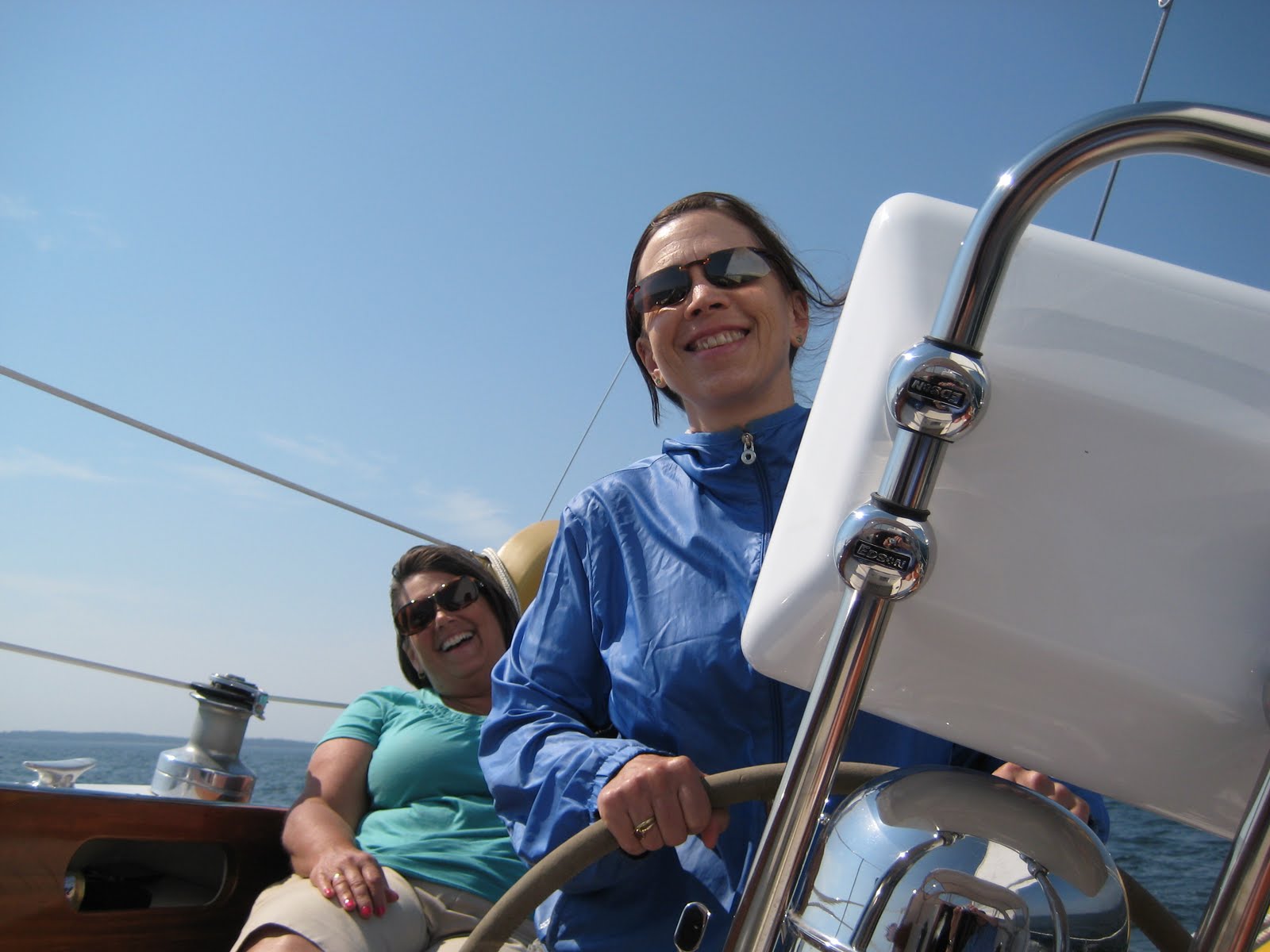
Sailing is a great sport for one who suffers from POTS (postural tachycardia syndrome). I have always loved sailing but in my mountain climbing days I disparaged it for being too sedentary. That doesn’t matter to me anymore. Now it is a plus to me that sailing does not demand a lot of upright posture. Instead there is a lot of sitting, squatting, short bouts of climbing and the occasional opportunity to lie down and rest. And the sitting that is involved is not necessarily inert. It involves a lot of core muscle tension and subtle exercise as one maneuvers around in sailing activities. In addition there is the aerobic exercise of rowing out to the boat and back in the dingy where one can maintain the advantageous recumbent posture. Just the right kind of exercise for a sufferer of POTS.

Thursday, June 30, 2011

Do I Have POTS or ME/CFS/CFIDS?

Both my life and my blog have been put on hold as I have recently gone through a time of transition. Life has been more challenging as I have been without the companionship and support of my husband as he has been in another part of the country helping his parents move into an assisted living apartment; followed by his staying with them when his father suffered a massive stroke two weeks later. It has been a very stressful time for us. Out of the past six weeks we have been together for less than two and a part of that was during the sad and busy events surrounding his Dad’s funeral.

Before all this happened we had planned to live in Maine for the summer. I have gone ahead and traveled to Maine without him. The upside of this time of chaos and grief is that I feel much better physically living in Maine.
 
 I have always observed that I feel better at sea level but the heart rate monitor that I have been wearing in recent months has given me objective data. My heart rate is a good 10-20 points lower here than it was in Colorado. I feel better and I have less fatigue.

My major symptoms are:

Fatigue
Post-exerional malaise or exercise intolerance
Cognitive problems-brain fog

Each of these are identified as symptoms for both POTS and ME/CFS/CFIDS. So I am left wondering…


Saturday, May 14, 2011

Still Reveling over Mother's Day and Baffled by our Colorado Springs (no pun intended)

My Mother's Day bouquet from James
  I have been enjoying the memories of Mother's Day all week. I woke up that morning assuming it would be a quiet day with Kim. It was a lovely, warm spring day as Mother's Day should be and I was happy for all the mothers who had various activities planned with their families. Sadly, there was no expectation of seeing Sarah on the east coast or Sean on the west coast and I assumed our youngest, James, was busy with his work at a nearby Camp. But James surprised me early afternoon with flowers and a thoughtful gift. We had a pleasant lunch on our deck and I felt blessed. In the evening I heard from both Sean and Sarah via phone and the nature of their conversations gave me additional joy.


Dining al fresco on Mother's Day

 
Even the recent snow cannot dampen my happy memories of Mother's Day!


Friday, May 6, 2011

Artistry with Strings

I urge anyone who lives in or visits Colorado Springs to take in some live theatre at the Simpich Showcase Marionette Theatre. It is a rare and magical piece of art that entertains and inspires as it tells classic tales and reveals spiritual truths. I was recently enchanted by a moving performance of John Bunyan’s allegory Pilgrim’s Progress in this small, intimate theatre that is perfect for a performance with marionette puppets.

Beautiful puppets adorned in period costumes bring the story to life. David Simpich uses deft movements of his hands and myriad voices with the twenty some puppets to dramatize the story. I am amazed at the many skills he uses to create a flight into fantasy as artisan, craftsman, playwright, actor and stage technician.

Although he convinces the audience that it is the puppets who are talking he resists remaining a silent presence behind the marionettes. He unobtrusively becomes a player as well, touching the audience with his warmth and humanity.

This theatre is beyond the understanding of very young children. But I have good memories of taking our children to these productions years ago when they were old enough to appreciate them. And I look forward to the time when my grandchildren can share this extraordinary experience with me.

Friday, April 29, 2011

ME and OI

I have made a new discovery in my continuing quest to find out what is wrong with me. I was cognizant of orthostatic intolerance as a medical condition but until recently the thought that it had anything to do with me was far from my mind. But I have learned more about it through following Sue Jackson’s blog Learning to Live with CFS: Heart Rate and Post-Exertional Crashes in CFS and Orthostatic Intolerance


The old wheels started turning and I began to explore and research OI. I started to keep track of my pulse and discovered that it did indeed race when I was standing or even sitting upright at a desk. This is known as postural tachycardia syndrome (POTS) and is one of the common forms of chronic orthostatic intolerance. I bought a heart rate monitor so that I could keep better track.

What it comes down to is this basic formula:

When the numbers are down = feel good
When the numbers spike = feel lousy
When the numbers spike for too long = post-exertional crash

It is nice to feel that I have some control now. When I don’t feel good (headache, fatigue, lightheadedness, brain fog) I can correlate it with my upright posture and increased heart rate. I get relief by adjusting my posture; sitting cross-legged or with feet elevated, crouching, reclining or lying down. I can also use my heart rate monitor to take note when the numbers are going up and change my posture to prevent the painful symptoms.

I now wonder if my health problems are due to orthostatic intolerance rather than myalgic encephalomyelitis/chronic fatigue syndrome. Or maybe it is just that OI is part of ME/CFS.

It would be very comfortable for me to adopt the Japanese custom of sitting on the floor at a low table.


Wednesday, April 20, 2011

ME and High Altitude

We returned from two lovely weeks in Florida last weekend. We had a glorious time of warm sun, balmy breezes, beach walks and nights falling asleep to the lullaby of waves. It was a great respite from the long winters that we have here at home. Colorado has a great climate—temperate summers, golden autumns and pleasant winters (I don’t mind winters of reasonable duration filled with the beauty of snow!). But spring in the Rocky Mountains is a different story—just one long extension of winter.


But shortly after arriving home I crashed. In spite of my time of rest and relaxation in Florida I am experiencing fatigue, headache and general malaise. Due to ME/CFS (Myalgic Encephalomyelitis/Chronic Fatigue Syndrome), I always have a hard time adjusting back to high altitude after a trip.

High altitude means less oxygen and in my case, less oxygen exacerbates my symptoms. When I travel to low altitude places, I feel much better. We are seriously considering moving.

The nature of ME/CFS is such that the cells of one’s body fail to receive or use the oxygen they require. This raises the question; could routine oxygen therapy be helpful to those who suffer from ME/CFS? In my continual perusal of articles and blogs regarding anything that is about ME/CFS I have run across a few references to this. But it is by no means a commonplace treatment.

Tuesday, March 29, 2011

Yea! I Didn't Crash!

Last week was a big week. I lived at high altitude, did my little bit of skiing, and had company. And yet I avoided crashing.

There are several reasons for this. I continued to pace carefully. I took two rest periods everyday—and when I cannot sleep I rest and practice relaxation exercises. I have started monitoring my heart rate, making sure that it rarely exceeds 60% of my maximum heart rate (a little challenging at high altitude!) And our company was entirely gracious, warm and caring. They showed unconditional love.

Unconditional love is a healing balm for your soul and is good for whatever ails you. God's love, in which I trust, is unconditional but sometimes we feel it most through other people.

Friday, March 18, 2011

Hypochondriac

Wolf Hall by Hilary Mantel is the latest book I have read with my book club. I had difficulty getting into it at first but I was engrossed by page 100 of its 900 pages. I like her portrayal of Thomas Cromwell—opposite from his prevailing image. Through his eyes we observe the rapacious world of the court of King Henry VIII as well as the turbulence of the English reformation.

I discovered that she wrote a memoir, Giving up the Ghost, that tells the story of her struggle with chronic illness. Intrigued, partially because of my own battle with Chronic Fatigue Syndrome, I read it. It is appalling what she endured not only from the illness but because of poor treatment from the medical establishment. It is tragic how her physical complaints as a young woman in her twenties were answered with psychotropic drugs that sent her spinning into a world of even more pain and suffering. Yet she describes it with grace and humor.

I have read many similar stories of people with CFS/ME/CFIDS. Why must some doctors assume that if they fail to understand the symptoms, the patient must be imagining them and therefore has a psychiatric problem? Why can’t doctors listen with compassion to the patient and admit that sometimes they simply don’t know? And not only doctors but friends and family as well? Hypochondriac is a word for when you don’t know what to do with another’s pain.

Friday, March 4, 2011

Wildlife Sighting

A few days ago I saw a bobcat. It looked like this:


 I wish I could use my own photo but it was the dim light of early morning and the cat trotted by too quickly.  It was thrilling as I have never seen a bobcat in the wild before. At first glance I thought it was a fox but, no, it looked like an enormous housecat with a bobbed tail.

My joy was tempered however by concern for the fluffy gray rabbit that has graced our property this winter. My husband and I have regarded it as our pet bunny. It made its presence known frequently; hanging out either by a drainage pipe or hollow log where it could easily escape predators. But on one occasion it failed to find safety in either of those places because I found a mere shred of its body yesterday; its one remaining little rabbit foot looking so pathetically sweet. I suspect the bobcat was responsible.

What an emotional roller coaster as I went from the high of seeing what to me was an exotic animal to discovering the torn body of our little bunny. Aw…the harsh reality of nature. I long for the peaceable kingdom!

Tuesday, March 1, 2011

The Mess that is CFS

I have recovered from my most recent crash and I am back on track. Through pacing, decent sleep, naps, meditation and very gentle exercise I am generally feeling okay again.

A friend referred me to the UK PACE trials study (thank you Jody!) and it has me doing a lot of thinking. The CFS/ME/CFIDS community has responded with anger and annoyance at the UK study because it suggests that CFS is not an Organic illness and that all CFS sufferers need is exercise and proper thinking. It reminds me of the time back in the days when I thought that Medicine could help me and I was in the midst of trying to explain 'post-exertional malaise' to a doctor (I didn’t know that name back then) and his response was, “You just need to get some exercise.”

Exercise has the potential to almost always result in a crash. A crash perpetually threatens to be around the next corner and when it occurs you are sent back to square one. It is as if the authors of those studies don’t really understand CFS. It makes one wonder if they worked with patients who actually have CFS. I would like to closely examine the study and see what the participants are like. As far as I have read about it, the study seems to be flawed.

It is a big mess. CFS may very well have an organic basis but there is a lack of funding to do the research. Meanwhile the many that are afflicted need money for basic survival and decent quality of life and governments such as that in the UK are resistant to giving benefits to people with an illness that they see as lacking legitimacy. When the new health care reform is implemented in the US, we are going to have the same struggle here.

What works for now!

Saturday, February 19, 2011

My Book Review

If Universalism is True: Why Jesus Christ Must Not Be God

I would prefer not to believe in a literal hell. I have always accepted that hell exists because that is what I was taught. It is one of the tenets of my Christian faith but I neglect to give it much thought. Perhaps I repress it. Come to think of it, it is rarely mentioned in our churches anymore. It is one of those uncomfortable, mysterious subjects that I choose to leave in God’s hands.


A friend suggested that a group of us read If Grace is True: Why God Will Save Every Person by Phillip Gulley and James Mulholland, and discuss these ideas. I read the first four chapters of the book in a rosy glow. I loved the emphasis on God’s grace and was elated at the suggestion that there isn’t a hell after all. As I started chapter five my rosy glow transformed into a dark cloud. When the author stated, “I believe Jesus had a special relationship with God and an important role in human history, though I’m no longer persuaded this required his divinity,” my faith went through a period of crisis. Although I continued to agree with many of the ideas expressed in the book, it no longer held the same credibility for me. I cannot disbelieve that Jesus Christ is God incarnate; it is too much woven into the fabric of my faith and I cling to Him as my Savior.


This book basically boils down to being another apologetic for Unitarian Universalism dogma. Their creed is that they don’t have a creed. But adherents are united on the denial of Jesus Christ as God and the rejection of the Bible as exclusive truth.


One area in which the book is lacking is the treatment of the subject of evil. The authors make too light of it. A big question that arose out of my reading surrounds the idea of atonement. The authors reject the idea that sin must be paid for. Early on they ask, “Why must sins be paid for?” They also claim that the Israelites sacrificed animals not because God instructed them to do so but because the cultures around them were doing it. I admit that the Old Testament is very difficult to understand but if God objected to his chosen people offering sacrifices because it is cruel and unnecessary, wouldn’t he have had made this obvious to them? Instead it seems the opposite. The need for atonement and animal sacrifices was central to their worship.

The authors tend to show grace and compassion to those who commit crimes and do great evil because, as they explain, often these people are raised in horrific abusive situations. This is understandable. On the other hand they show a callousness to those who have been sinned against. They expect victims to be compassionate and forgiving and give examples of those who have done so. But I contend that it is not easy for a person who has been victimized. The authors seem to ignore their pain. They imply, “No big deal. Forgive and get over it. God does.” I’m not saying that revenge or severe punishment is the only way—I’m just asking, what do we do with evil—of which there is plenty?

If I were to offer a theory on universalism, it would go like this: I believe that Jesus Christ is God incarnate and the only way to heaven. God saves all people but He does it on the basis of the ultimate sacrifice of Jesus. A sincere, good Christian, Muslim, Hindu or representative of any other faith will not get into heaven based on good works and devout beliefs but because Jesus died for him/her like he did for everyone else in the world.

I still don’t know about hell. It is difficult to ignore the many scriptural references to hell and especially those uttered by Jesus. It is one of those areas of my Christian faith that I cannot tie up in a neat, pretty knot. And if I were given proof beyond a shadow of a doubt that there is a hell, would I reject God on that basis? Mystery is a part of my faith. God is way bigger than me and on this side of the grave it is impossible to understand everything about Him. But I do believe that God is love and bestows an abundance of mercy and grace on the world. I trust Him to do the right thing.

Tuesday, February 15, 2011

My First Crash of 2011

I have been spending the past month at our ski condominium in Keystone, CO. I love the mountains and I have a passion for skiing. There has been an abundance of snow this year and I am enjoying this white, frosty winter wonderland.  In an effort to carefully pace myself, I made a plan to ski one run every other day. I have a season pass and although I cannot comfortably ski a lot in a given day, I planned to ski many days doing that little bit. It takes about an hour to ride the gondola to the top of the mountain and ski a nice long run down. It makes for a pleasant outing—a bit of exercise, fresh air and an opportunity to do something I love.

This was working fine until five days ago. My young, energetic nephew was up from Denver and came to Keystone to ski with us. It was supposed to be my alternate day; my rest day from skiing. But because I was feeling pretty good and I didn’t want to let him down or be embarrassed from the little bit of skiing I can do, I skied three runs. What is so little to a person of normal health can make a CFS sufferer crash big time. And my crash came in the form of a nasty upper respiratory infection. At least this is my strong suspicion. It could be a coincidence that I caught this cold at the same time I overdid the skiing. However it has happened before when I overdo. Sometimes the crash takes the form of that ‘hit by a truck feeling’ fatigue that sends me to bed but it can also be a bad cold. In either case the fatigue and pain slow me down considerably.
How I regret stepping outside of my energy envelope. I am allowing my body the rest that it is demanding and plan to be more prudent in the future.


Thursday, February 10, 2011

Progress

My quality of life has improved since I’ve started doing things the Bruce Campbell way. I have more good days and actually experience times of that delicious feeling of well being. And it follows that when I have good days I have good nights. I sleep better when I have good days.


It is a discipline, believe me. There are days when I am tempted to abandon the plan and skip my naps and extend myself. But I know now that that would be a big mistake.

One of my major goals is to avoid crashes. They are a major stressor on my body and I don’t do myself any favors by allowing myself to endure them. I believe they exacerbate the illness of Chronic Fatigue Syndrome and prevent recovery. Circumstances may come up in life when I am forced to expend more energy than is healthy for me but as much as possible I want to pace and rest on a regular basis to prevent crashes. I trust that this will result in a steady increase in improved health and recovery.

A few observations:

1) Good pacing and resting allows for that groggy feeling after a nap. When in the throes of the symptoms of Chronic Fatigue Syndrome I never feel groggy, only drained and sick. Groggy and sleepy feels more normal, healthier.

2) I have discovered that there is an art to conserving energy. I have to be constantly creative to find ways to ‘stay within the energy envelope.’ For example, taking my dog for a walk on leash can be very tiring. She pulls me more than I want to go in her doggie quest to vent her energy. Instead I drive to a a dog park or a spot where I can let her run free. I keep treats in my pocket to lure her when she wanders too far away. Thus she has opportunity to run and get the exercise she needs while I can walk slowly and leisurely.

3) I know I am feeling better when I feel motivated. Motivation is linked to energy and zest for life. When I lack motivation it is a sign that I am not getting enough rest.

4) Another sign of health is the enjoyment of music. Music is merely noise when I feel sick.

4) I need to find ways to help friends and family understand my inability to keep up with them. Most of the time I appear healthy and they don’t have a clue as to the pain I am experiencing.

After ten years I am finally learning to accept this illness. Not that I won’t continue to search for healing but I have learned that to have a sense of well being that I must learn to live within certain constraints. Frequent rest and the acceptance that I am unable to do certain things must be a part of my life. Sometimes this is very hard but at the same time it provides wonderful times of feeling good and normal again. Who wouldn’t want that? And why I have fought it so in the past? There must be some deep psychological reasons. For one, I wrestle against feelings of guilt. Am I being too indulgent by allowing myself all this rest? But my job right now is to get better and that is where I must put my focus.

Saturday, January 1, 2011

Bruce Campbell's Way

My New Year’s resolution is to use Bruce Campbell’s way to seek healing from CFIDS. This time I plan to be more deliberate about it. I have been aware of his method and his Self-help CFIDS and Fibromyalgia Organization and have tried to incorporate his strategies into my life before, but I keep failing. His strategies seem simple, straightforward and cheap but they are actually very difficult to practice. Why?

It is because it is extremely difficult to consistently hold back, carefully pace, keep records, and make rest a priority. It requires great discipline. I jeopardize myself again and again. I am a people pleaser and it is hard to say no to family and friends. I want to be hardworking, productive and successful. Reminders that I need to pace myself and rest injure my self-esteem because I am forced to admit that I am weak and fragile. And I believe that there is something in human nature that resists our need for rest.

I inhale general concepts in an intuitive way and grasp the essential truth of them but that doesn’t mean that I always incorporate them into my daily life. That is what has happened in the past with Bruce Campbell’s way. It takes discipline to not only learn about something but to practice it on a daily basis.

I digress to admit that this is also very true of my Christian faith. It is easy to inhale and grasp the truth of God’s existence, his love, his plan of redemption and the hope for a changed life but it can be quite a challenge to apply it and to cause substantial change. It takes discipline to slowly and carefully digest God’s ways that effect change in behavior. That may be why many Christians are hypocrites. They testify to it because in their mind it is real to them but their behavior may not reflect it.

But the New Year promises a fresh start and I hope to recover from CFIDS the Bruce Campbell way in 2011.

http://www.recoveryfromcfs.org/index.htm
http://www.treatcfsfm.org/
http://www.cfidsselfhelp.org/library/acceptance-discipline-hope-a-story-recovery-cfids

Wednesday, December 8, 2010

The Frustration of CFIDS

It is frustrating to have a condition like Chronic Fatigue Syndrome or Chronic Fatigue Immune Dysfunction Syndrome. It is an illness that family and friends don’t really understand or accept. It hurts emotionally to feel sick and wretched and for people to think you are making it up. Some try to understand but they never really get it. They expect you to function at the same level they can and you feel like a wuss for not being able to keep up.

Most of the time when people are sick they can go to a doctor for help and relief but not with CFIDS. There may be some doctors who understand but basically the illness does not have legitimacy. There has been little research. And there has been an absence of biological markers until recently when a link has been discovered between the retrovirus, XMRV and CFIDS. Yet it is not certain what can be done. The research shows a high percentage of people with CFIDS are positive for XMRV but not all. So what gives?

I have been toying with the idea of being tested for XMRV but with the time and expense of it all, what would I gain? This is particularly when the treatment available is in the experimental stage.

I have been following one blog with great interest of a physician, who along with her daughter have been tested positive by culture for XMRV. http://treatingxmrv.blogspot.com/   They have sought help through treatment of antiretroviral medication. They have found a sympathetic doctor to treat them and monitor their progress. So far she claims it has helped. But I don’t know if I want to go there. I am moderately functional and I fear the often damaging side effects of powerful drugs. Perhaps I would take the risk if I were bedridden. But right now I prefer to take and watch and see approach.

Friday, November 19, 2010

Maud

One of the things that Kim and I did on our cross country drive home was to divert to Toronto and explore Lucy Maud Montgomery’s Ontario. At the age of 35, L.M. Montgomery married and left Prince Edward Island with her husband, Ewan MacDonald, who was a Presbyterian minister. They served at two pastorates, Leaskdale and Norval, and moved to the city when her husband retired. These places are where she wrote most of her books.

An Artist's rendering of Maud in Leaskdale
This past summer Kim and I took a vacation on PEI with my sister, her husband and their two daughters. Other than relaxing on the beach and enjoying conversation over delicious meals at the Shaw Hotel, we visited most of the LM Montgomery tourist sites. My brother-in-law coined a new word; “Anne-ing” and we did an extensive amount of this. I became reacquainted with all things “Anne” (of Green Gables) and its popular author. Since we planned to drive back to Colorado this fall, it seemed easy and appropriate to stop by Toronto and continue the tour. I had heard that the manse in Leaskdale where she and her husband first lived after they were married is now a tourist site/museum and I was eager to see it.

It was November by the time we rumbled through the greater Toronto area. We spent three nights in Oshawa on the east side of the city. I failed to realize until we were there that the museums and tourist sites were closed for the season. I don’t know what I was thinking. I assumed that because I wanted to see them and because of their proximity to a big city that they would still be open, although perhaps with limited hours. I had perused one website that said that the manse at Leaskdale would be open until Thanksgiving but I forgot that the Canadian Thanksgiving is earlier than ours—October 11 this year. But I swallowed my disappointment and thought that it was still nice to be there and we could drive around and view the countryside and the outside of the buildings where her life took place.

We spent the first of our two days in Uxbridge/Leaskdale, an hour’s drive due north of Oshawa. It was a nice sunny day, brisk, but tolerable for walking about outdoors. Uxbridge is a charming town (and also 'the trail capital of Canada') and we wandered about the outdoors of the Uxbridge-Scott Museum which houses a L.M. Montgomery exhibit but was closed. I bought a copy of Volume V:1935-1942 of The Selected Journals of the author at The Blue Heron Bookstore in town. We ran across both a gluten-free bakery and restaurant, both named Franke’s, and I was in heaven because I could once again enjoy the treats of bread and cake. We drove on to Leaskdale and easily found the Presbyterian Church. We pulled into the parking lot and as we were getting out of our car to take photos, a woman drove up. She looked at us as if expecting us but of course she could not have been. I hardly opened my mouth to say hello when she said, “Would you like me to show you the inside of the church and then take you over to the manse so you can see that too?” I was awestruck by our good fortune as this kind, friendly woman gave us an thorough tour of the church and manse. We learned that she is the president of The Lucy Maud Montgomery Society of Ontario. Both church and manse have been bought by the Society to make an exhibit of Montgomery’s life in Leaskdale. Their goal is to make the Leaskdale site one of scholarship and a deeper understanding of Montgomery’s influence on Canadian literature and the world and not so much a ‘Wonderland’ like that which is on Prince Edward Island.

In addition to learning more about LMM, we enjoyed the beauty of the rural rolling countryside. The farms scattered all over the area have the prettiest farmhouses and barns. Pastureland and fields of crops are broken up by stands of trees, pockets of forests, creeks, rivers and ponds and I was enchanted by it all.

On the second day we drove to the west of Toronto to Norval where the MacDonalds lived after they left Leaskdale. It was another pretty town, a bit more built up than Leaskdale but easy to recognize from LMM’s time. There has not been the same effort to showcase the church and manse as in Leaskdale. The Presbyterian Church continues to function as a church and it rents out the house that was once a manse. Kim opened the door of the church and called hello and was rewarded when the present minister welcomed us to come inside. He was about 30 and was reserved and shy. But he answered several of our questions and offered some information. He pointed out a photo of Ewan MacDonald on a wall of photos of all the church ministers since 1840. He showed us where Maud would perform her theatrical productions. He led us to the sanctuary which looks very much like it did back in Maud’s day except that the floor is covered by an ugly red carpet. There was an plague of appreciation to Ewan and Maud and the same hymn boards that Maud gifted to the church. Kim hinted at some questions about Ewan and Maud’s spirituality but he didn’t bite. As we left him, he directed us to the LMM garden and we delighted walking through it as well as along the lovely Credit River.

We left Norval to visit the last of the houses where LMM lived. After Ewan MacDonald retired, due to mental illness (a sad story), the family moved to Toronto and Maud bought a house. Although grown, their two sons lived at home while attending university. The house is tudor style on a bluff overlooking the Humber River and not far from the lakefront. Her old neighborhood is charming; an island of pleasant domesticity only a short drive away from the congestion of a vast city, skyscrapers and all.

I started reading her journal, Volume V, when we returned to the hotel that evening. It was almost an eerie coincidence that the first entry described her move from Norval to Toronto and I had seen those places that very day.

I would have liked to do more exploring; the University of Guelph to see its large collection of archival material and personal artifacts as well as Bala, the spot that inspired one of my favorite of her books, The Blue Castle. Maybe next time.


Monday, November 15, 2010

Crashing in Colorado

I recently returned from spending a little over two months on the east coast. Part of that time was with Sarah, Andrew, Henry and Julian. The rest of the time Kim and I resided at our place on Mount Desert Island in Maine. Initially I flew to Boston but I came back with Kim via car. I loved that whole experience. I think I like the nomadic life.

When I was out east I would have times of fatigue that is beyond normal but I could keep my head above water. When I returned to our home in Colorado I sank beneath the surface. Most sufferers of Chronic Fatigue Syndrome know this as crashing. Usually the crash, also known as post-exertional malaise, occurs because of more activity than I can handle. But every time I return home to Colorado I experience the same thing. I have a theory about this—in addition to or maybe because of CFS my body has a hard time adjusting to high altitude. It always happens when I fly home. I hoped that because we drove and the trip was more gradual, I would escape the crash, but no.

The crash or post-exertional malaise is painful—an all encompassing fatigue but not necessarily achy, sore or smarting (well, okay, sometimes it is accompanied by a headache and sore throat ). I can’t move and I can’t think. It has been five days and I am feeling better. Otherwise I would not be able to write this post.

Friday, October 29, 2010

The Glory of King Solomon


I would love to enter a time travel machine and observe Israel at the time of Solomon’s reign. His father’s military efforts had paid off making the nation secure and peaceable. It had wide borders and the people were happy and well fed.


King Solomon was a fascinating figure. He was king of Israel at the height of its glory. The whole world sought audience with Solomon to listen his great wisdom. He was a writer with three books to his credit in the canon of Scripture. He had an intimate knowledge of the natural world. He was extremely wealthy and perhaps one of the few men in all of history to have every material desire fulfilled.


It is interesting that Solomon was a child of the union between David and Bathsheba—the relationship that represented the great sin of David’s life. David committed both adultery and murder to make Bathsheba his wife. But God granted his plea for forgiveness. And a son of this union becomes king and reigns at the time of the greatest glory of ancient Israel. God gave David a fresh start through Solomon. It is a beautiful example of God’s mercy, grace and propensity to offer second chances.


Yet Solomon drifted away from worshiping Yahweh who gave him everything on a golden platter. It is a marvel that some people, who have all the world has to offer can completely blow it. Solomon was able to avoid disaster but he set in motion the downward spiral of the nation of Israel into ruin. First he followed after the way of the kings at that time and focused on the exclusive goals of wealth, power and an excessively large harem. Then he allowed his foreign wives to lead him astray and worship other gods. How did they manage to have so much influence on him anyway? I thought women were powerless in the ancient world. Yet they managed to corrupt the wisest man alive. The nation of God’s chosen people, for whom He cared so much, starts to unravel following the death of Solomon.